
Dead Grandmas Are Universal: Poetry, Grief & Survival


Some poetry collections ask to be read. Others ask to be felt. In Dead Grandmas Are Universal, poet and editor Marissa invites readers into a deeply personal landscape shaped by grief, queerness, mental health, survival, love, and the enduring influence of the women who came before her. What begins as an exploration of loss gradually unfolds into a powerful meditation on identity, resilience, and the universal desire to be loved without losing oneself. In this candid conversation, Marissa reflects on the stories behind her debut collection, the healing and heartbreak of writing from lived experience, and the literary journey that transformed individual poems into a voice that resonates far beyond the page.
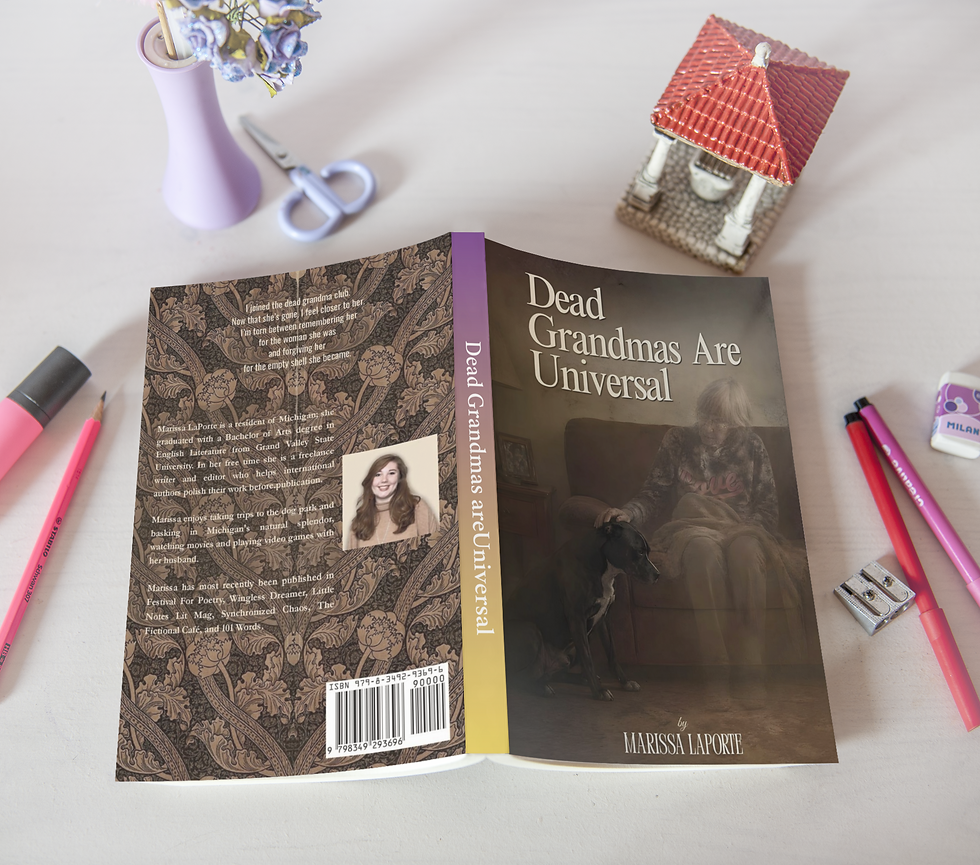
1. Your new collection, Dead Grandmas Are Universal, explores trauma, grief, queerness, mental illness, survival, and womanhood. What inspired you to bring these deeply personal themes together into one collection?
Answer: I’ve been a writer my whole life, and this collection spans across years of lived experiences and emotions. The passing of my grandmother really inspired the first few poems, but the rest are a myriad of moments and feelings that share a common theme: The desperate longing to be loved without disappearing in the process. My grandmother and my mother are very strong women whom I’ve always looked up to. As a queer woman who has struggled with grief, relationship dynamics, mental health, and has lived many years in survival mode, I believe it’s important for other women who have had similar experiences to feel seen.
2. Many of your poems were previously published through Wingless Dreamer across several anthologies. How has your relationship with these poems—and with your own voice as a poet —evolved since you first wrote them?
Answer: My writing evolves with my lived experiences. My life now is much different than it was just five
years ago, but similar emotions like grief, anxiety, joy, and love are always recurring. Life is full of universal emotions that everyone experiences, and it’s important to explore and express them in ways that honor them. Poetry lives and changes with the life you breathe into it. Sometimes when I read my own work, it can be hard to recognize the woman who wrote it. Life changes so fast, and a poem can be a great way to capture a moment in the past.
3. The title Dead Grandmas Are Universal is striking, intimate, and almost paradoxical. What does this title mean to you, and what did you hope readers would feel when they first encountered it?
Answer: The title came to me when I started writing about my grandmother’s death, and it is the name of
the first poem that appears in the collection. My family asked me to write her obituary because I’m the “writer of the family.” It felt very ironic because one summer in high school I wrote obituaries, wedding and birth announcements for the local newspaper, and now I was writing my own grandmother’s obituary for that same newspaper a decade later. Death, birth, and love are all universal human experiences that we must feel and face. Loss is something we all come to know at one time or another in our lives.
4. Your work explores generational legacies of addiction, abuse, self-destruction, and resilience. Do you see poetry as a way of breaking inherited cycles, documenting them, or simply giving them a voice?
Answer: Poetry and writing have always been a form of therapy for me. Sometimes my emotions feel too big, too much, too powerful, and it helps to translate them onto a page. There are times when writing about my experiences feels like healing, and sometimes it feels like coming apart. It’s important to me to remember where I come from, what I’ve been through, and that helps me decide who I want to become. I wouldn’t be who I am without my history. We can’t choose where we come from, but we can decide where to go from there.

5. You hold a degree in English Literature and also work as a freelance writer and editor helping international authors polish their work. How does being an editor influence the way you approach your own poetry?
Answer: As an editor myself, I still had my poetry collection workshopped by members of my local writing community. I worried they may be getting sick of seeing the same poems with slightly different variations leading up to the publication of this collection, but they were always happy to reread my work and challenge me to dig deeper. It’s so important to have a second set of eyes and a second opinion. Writing is a very intimate process. Sometimes as the writer you can be too close to the source material. A bookish companion is a great resource to dig more details out of a poem or a story because they didn’t experience it directly and they want to know more.
6. Looking back at your journey with Wingless Dreamer—from individual contest submissions to having those works collected in your own book—what has this literary journey taught you about persistence, community, and finding your voice?
Answer: I’m so thankful to Wingless Dreamer for their contests and writing themes. Sometimes all it takes is an idea, and my brain runs with it. I made it a goal of mine to continue writing consistently until I had a complete poetry collection that I was proud of. Wingless Dreamer helped me achieve this with their collection of themes and boosted my confidence by accepting my individual poems to be published in their own collections. When I decided that I wanted a poetry collection of my own, I needed more fresh and raw experiences to work with. Wingless Dreamer’s contests challenged me to keep digging for more of that raw emotional content within myself that I can now share with readers.

RAPID FIRE: MARISSA, UNFILTERED!
To wrap things up, let's step away from the heavier themes and get to know the writer behind the poems—with a quick round of choices, instincts, and a little literary mischief!
1. Your ideal writing companion?
A. Coffee ☕
B. Music 🎧 ✔
C. Complete silence 🤫
2. A poem usually begins with...
A. A feeling ✔
B. A random thought
C. A line that refuses to leave your head
3. Your favourite place to find inspiration?
A. Nature 🌿 ✔
B. Home
C. Somewhere completely unexpected
4. Writer's block calls for...
A. A walk at the dog park 🐕 ✔
B. A movie 🎬
C. Ignoring it until it gets scared and leaves
5. If your poetry had a colour, it would be...
A. Deep red ✔
B. Midnight blue
C. Violet
6. Pick your writer alter ego:
A. The Overthinker
B. The Confessor ✔
C. The Chaos Poet
7. Your favourite kind of story?
A. Heartbreaking ✔
B. Weird and unpredictable
C. Happily-ever-after
8. If you could spend one day inside a fictional world, you'd choose...
A. A fantasy kingdom 🏰
B. A video game universe 🎮 ✔
C. A cozy small town
9. The hardest part of being a writer is...
A. Starting
B. Finishing ✔
C. Letting someone else read it
10. Complete the sentence: “A good poem should...”
A. Make you feel something
B. Make you question something
C. Stay with you long after you've finished reading it ✔
ABOUT THE BLOGGER

Marissa LaPorte is a resident of Michigan; she graduated with a Bachelor of Arts degree in English Literature from Grand Valley State University. In her free time she is a freelance writer and editor who helps international authors polish their work before publication. Marissa enjoys taking trips to the dog park and basking in Michigan's natural splendor, watching movies and playing video games with her husband.
Website:
Book: Dead Grandmas Are Universal



Comments