
Movies That Slapped Me Awake in the Best Way Possible

Some movies enter your life very politely, like, “Hello, I’ll just entertain you for two hours and be on my way.” And then there are the other kind…the ones that crash into your life, plop themselves at your emotional dinner table, and go,
“Hi. I live here now.”
This blog is about those movies.
Films are a kind of emotional architecture; they build entire rooms inside you. Some are bright and loud, some feel like warm blankets, and some are those strange little corridors where you suddenly find yourself crying at 2 AM over a character who isn’t even real. But that’s the beauty of it: movies slip into the quiet corners of your mind and rearrange things before you even notice. Some movies don’t just entertain us, they enter our bloodstream quietly, rearranging something internal. They stay, long after the credits roll, long after the lights come up, long after we return to the ordinariness of our lives. They become emotional landmarks: films we return to in moments of doubt, heartbreak, joy, or fear.
These four — The Sound of Music, Interstellar, Little Women, and Dead Poets Society — feel like that to me. They arrived at different ages and different versions of myself, but together they formed a map of who I became.
Together, they’re nothing alike, yet somehow they fit perfectly. They’re basically the four chaotic members of a cinematic friend group: the cheerful one, the existential one, the artsy one, and the inspirational English teacher who ruins your life in the best way possible. Some of these films taught me how to dream. Some taught me how to feel. One of them convinced me that poetry counts as a life philosophy… which honestly meant a lot. So this isn’t a review blog. It’s more like a memory lane. A scrapbook. A little mixtape. A slightly chaotic love letter to the movies that became emotional landmarks, the ones that didn’t just stay on the screen, but somehow stitched themselves into who I am. Let’s begin.
1. The Sound of Music — Choosing Joy in the Middle of Darkness, the best movie ever!

I first watched The Sound of Music on a summer evening so ordinary it shouldn’t have been memorable. Yet, the moment Maria twirled on the hilltop, singing as though joy itself were oxygen, something opened inside me. The film is remembered as cheerful, soft, almost naive, but beneath its sweetness is a lesson in resilience I didn’t know I needed.
Maria’s optimism isn't the kind painted on; it’s forged in adversity. She sings not because life is easy, but because it isn’t. The Von Trapp children, stiffened by grief and discipline, rediscover laughter through her. Captain Von Trapp, hardened by loss and fear, finds warmth again. And all of this happens against the backdrop of war, threat, and displacement.
What The Sound of Music taught me is that joy can be an act of rebellion. Hope can be a form of resistance. And sometimes, choosing to sing, literally or metaphorically, is the bravest thing we do. My keepsake from the film is a simple one: even in the darkest rooms, someone can open a window.
2. Interstellar — The Best Movie About the Mathematics and Madness of Love

If The Sound of Music is a lesson in joy, Interstellar is a lesson in gravity, time, emptiness, and strangely, love.
Watching Interstellar felt overwhelming the first time: the silence of space, the vastness, the loneliness, the impossible dilemmas.
But beneath the spectacle, the movie whispered something quieter: love is a force not fully understood, but undeniably real. Not soft. Not sentimental. A force, measurable in the choices we make, the distances we travel, the sacrifices we endure.
Murph waiting for Cooper might be one of the most powerful portrayals of father–daughter love I’ve ever seen. And watching Cooper leave her, knowing she wouldn’t understand, knowing she would feel abandoned, is the kind of heartbreak adulthood quietly prepares us for. Sometimes you have to make choices that hurt the people you love, even when you’re doing it for them. That’s a very real kind of pain. This movie changed the way I think about connection. It made love feel less like something fragile, we tiptoe around, and more like something gravitational, something that pulls, bends, guides, and rearranges entire lives without asking permission. The keepsake this movie leaves behind: love is not an escape from reality; it’s a compass that guides us through it.
3. Little Women — The Many Ways a Woman Can Be Strong

Little Women came into my life like a quiet confession, gentle, warm, nostalgic, but with this hidden sharpness underneath. It carries all the messy things nobody tells you about girlhood: the ambition that feels too big, the longing that feels too tender, the disappointments you pretend don’t hurt, and the strange tug-of-war between who you are and who you want to become. Jo March showed me that wanting more from life doesn’t mean you’re ungrateful for what you already have. Amy proved that ambition and softness don’t cancel each other out, you’re allowed to be both. Meg reminded me that choosing love is not choosing “less”; it’s choosing differently. And Beth, in her quiet way, made me realise that gentleness can be its own kind of strength.
Greta Gerwig’s adaptation does something rare and almost comforting: it lets women be contradictory without apologising for it. Watching it felt like looking into a mirror that kept shifting, showing me different versions of myself depending on where I was in life. The part of me that wants to be seen. The part that wants to be understood. The part that dreams of creating something meaningful. And the part that’s scared of being left behind. The keepsake this movie leaves behind: there is no one right way to be a woman; there are only honest ways.
4. Dead Poets Society — The Permission to Live Deeply

Some movies tap you on the shoulder gently. Dead Poets Society struck like a thunderclap. When Mr. Keating says, “We must constantly look at things in a different way,” it doesn’t land like a quote you underline in a book. It lands like a dare. The film captures that quiet tug-of-war between who the world expects you to be and who you secretly hope you could be. It speaks to the fear of disappointing people you love, the pressure to fit into a shape that doesn’t quite feel like yours, and the heavy weight of dreams you never say out loud.
But it also treats poetry like oxygen, not something required for survival, but something required for actually living. For feeling. For existing in a way that isn’t numb or automatic. There were moments in my own life when choosing passion felt irresponsible, even selfish, like wanting more meant I was somehow asking for too much. Wanting a fuller, deeper, messier life felt almost… unreasonable. And that’s when this film hit me hardest.
It felt like someone quietly putting a hand on my shoulder and saying, “It’s okay. You’re allowed to want more. You’re allowed to be more.”
The keepsake this movie leaves behind: the first step toward becoming yourself is giving yourself permission.
Conclusion — The Films That Shape Us Become Part of Us
These four best movies could not be more different, one bursts into song on mountaintops, one launches itself into a black hole, one sits by a warm fireplace stitching together the softness and chaos of girlhood, and one stands on a desk yelling “O Captain! My Captain!” like it’s a battle cry. And yet, somehow, they fit together. They form this little constellation in my mind, each star glowing with a different lesson: that joy can be a bold, almost rebellious choice; that love can stretch across galaxies; that ambition can be gentle; and that life isn’t something to simply get through, it’s something to actually taste!
Movies don’t always change us in a dramatic, lightning-strike kind of way. Sometimes they slip something tiny and almost invisible into a corner of your heart, a thought, a feeling, a possibility, and it just sits there quietly. Until one day, when you’re older or lonelier or braver or more confused than usual, it suddenly clicks. And you realise that film has been echoing inside you the whole time, waiting for the right moment to be heard.
And when the best movie truly reaches you, really reaches you, it stops being just a movie. It becomes a place you revisit when life feels too loud or too quiet. A home you can walk into anytime. A compass you didn’t know you needed. A soft, steady friend who doesn’t always talk, but somehow always understands.
ABOUT THE BLOGGER

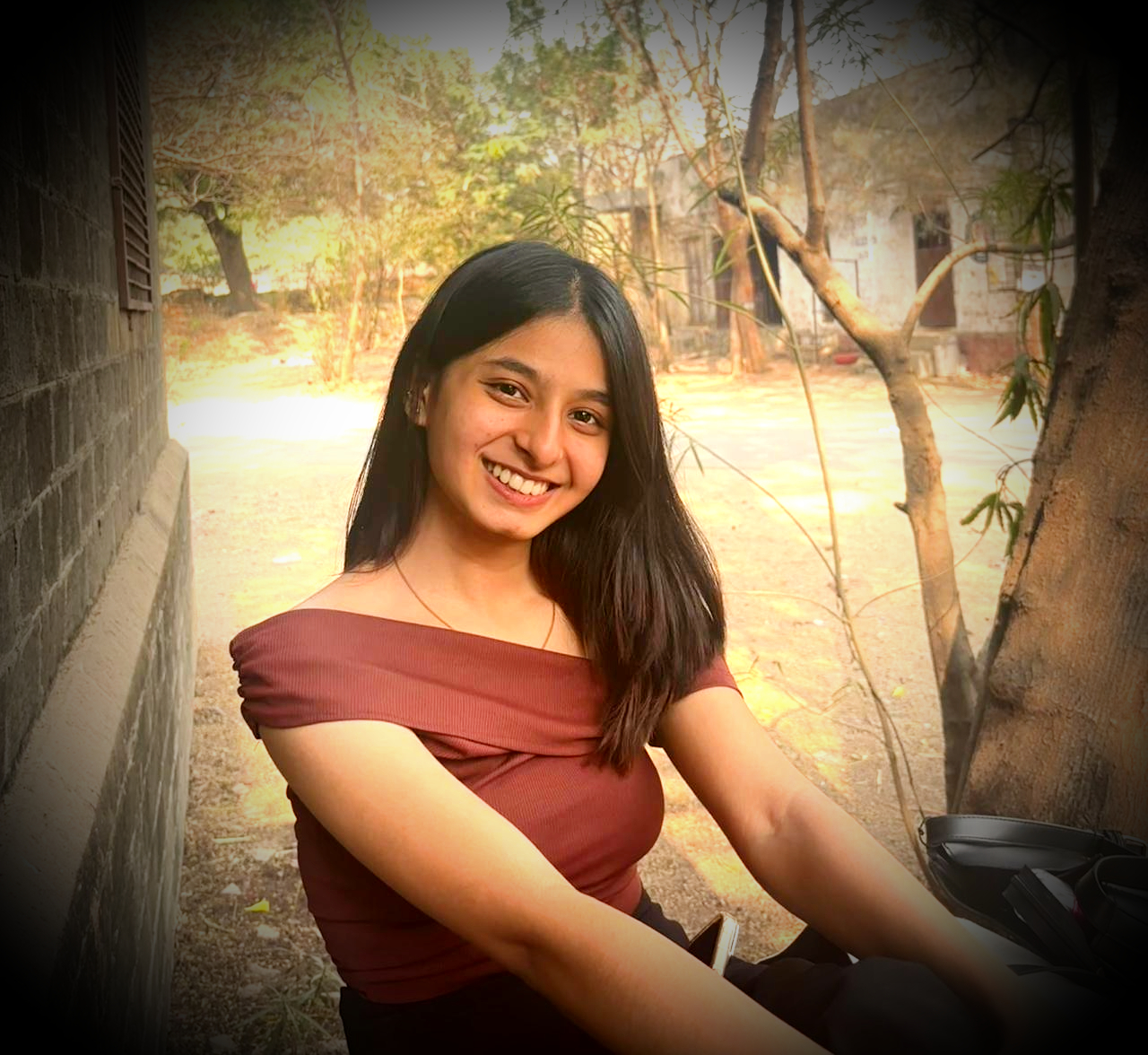
Aarjavee Chankeshwara is an English literature student who always has her nose buried in a novel. Her life motto is to capture every silly, joyful moment. She is the kind of person who will always make you laugh. She could easily be a character straight out of Gilmore Girls and she’s seriously obsessed with sunflowers and poetry.


Comments