
Finding Story-Truth in the Blank Page: A Conversation with Jon Gluckman

Updated: Sep 1

What does it mean to transform raw human memory into undeniable literary fiction? For retired educator and widely published author Jon Gluckman, the craft of creative writing isn't merely about documenting facts—it is about capturing the emotional weight of living until it lands squarely in the reader’s gut.
In his powerful coming-of-age story, Different Geometric Terms Children Should Learn, Gluckman channels decades of classroom observations and deep personal reflection to explore youth, grief, identity, and the universal quest for belonging. Drawing inspiration from Tim O’Brien’s concept of "story-truth," Gluckman balances the heart-wrenching realities of family hardship and adolescent vulnerability with unexpected moments of warmth, humor, and an unshakeable passion for life.
Let's take a glimpse into his creativity through this blog Interview.
Different Geometric Terms Children Should Learn beautifully blends humour, nostalgia, and heartbreak. What inspired you to tell this coming-of-age story through the lens of geometry and geometric imagery?
Answer: Well, first, thank you for these kind words about my story. Beyond being a creative non-fiction piece, this real-life experience has stayed with me like a leech, latched on from an ill-advised swim in some dark, algae-choked jungle stream of consciousness. These experiences have hung on, made themselves available to me, whereas others hide somewhere unfathomable in my subconscious.
So, one morning, as it happens, I wake up, and this walk to my new school as an adolescent, past the boys of Calais, smoking dope, sitting in the geometry class with this dried-up geometry teacher with the cracking hands, one latex glove away from feeling anything directly, stoned, having to deal with authoritarian administrators, and all while slowly being unhinged by the anticipation of loss, not really understanding it, and then when it happens, the profound loss as only a teenager feels it comes to the forefront of my mind.
And then, I pull up the next terrifying blank document, because I have no choice, and I let the story tell itself in the way that Tim O’Brien speaks about story truth and storytelling, where truth is not necessarily an actual occurrence.
That, he says, is irrelevant. Truth is felt in the gut. When you write a story, be it fiction, non-fiction, or creative non-fiction, you need to write it so it lands in your reader’s gut, he says. Then you know you have told the truth, even if it's fiction. Because truth relies on that mixture of fact and fiction, because that, in the end, is how we experience life.
The protagonist's desire for connection leads him to make a decision that changes how others perceive him. How important is the theme of belonging and acceptance in your writing, and does it reflect any observations from your own life as an educator?
Answer: The themes of belonging and acceptance are central to nearly all of my stories.
I feel human beings, plagued by the knowledge of their own temporality and interiority, are forever alone, even when we are with others.
Therefore, we long for companionship, someone to accept and understand us, a release from whatever hell we might experience or whatever happiness we want to share. My characters come to me as voices that speak from this dual plane of existence. So, in “Different Geometric Terms Children Should Learn,” this boy, this voice, this younger self, woke me up, shook me by the collar, and told me to tell this story. And in some ways, I have seen this story told by all the adolescents I’ve taught for nearly forty years.
As a retired English teacher, you've spent years guiding young minds. Did your experience in the classroom influence the authentic teenage voice, emotions, and school dynamics portrayed in this story?
Answer: Well, this is the lovely mystery of writing, isn’t it? Where does that narrator’s voice come from? That’s the seduction into telling the story. To see which gods I’m able to call down. I think being both a high school student in the 1970s, in these types of situations, or similar ones, and an educator until three years ago, whose parents were both teachers, has given me the means to write this story with authenticity, whether or not I was conscious of it while writing. The voice of that teenage narrator sprang organically from the soil of my subconscious and demanded to be heard.
Beneath the humour and vivid descriptions lies a deeply moving exploration of grief, identity, and family hardship. How did you balance the light-hearted moments with the emotional weight of the mother's illness and the protagonist's personal struggles?
Answer: I believe human beings are multidimensional, and that life is full of moments of devastating sorrow, deep emotion, and sheer hilarity, which give us the rich experience of existence. I attempt to portray that in my writing because from there, life manifests our humanity, which, of course, is unique to us. So, within me, like a tennis match, my mind is like the tennis ball that flits between the absurdity of living (where the humor comes from) and the experiences that scald and change you from their severe, as you have so poignantly put it, “emotional weight.”
And as human beings, we feel the most when tossed between extremes.
You often express the belief that “Life is Good” despite its hardships. How does this philosophy shape your storytelling, particularly when writing characters who are navigating confusion, loss, and transformation?
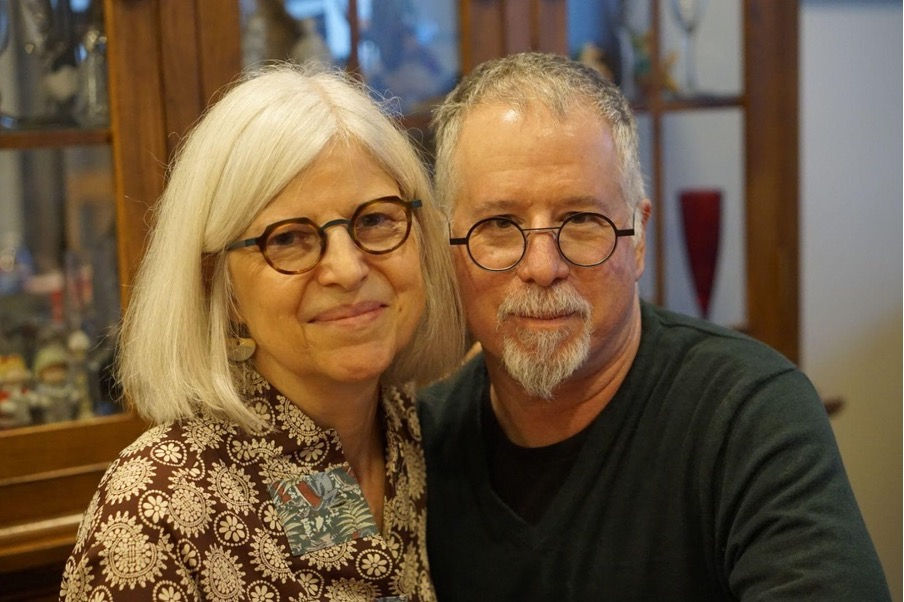
Answer: Food. There is always the next meal. And in my house, Barbara is a fabulous cook. If I were to die tomorrow, I’d miss the next meal. And I’d miss eating it with her. That is just too devastating to think about. And then there are the museum trips, the love and joy of being with our family, music, punk, garage, surf, wonderful literature, films, sunrises and sunsets, dogs, and a cat who still doesn’t quite trust me after a year of acquaintance. You have to see and love it all. The good and the bad. Because that makes life, life. I believe my passion for living comes through in the spirit and actions of my characters, whether through their energy or what they do. Finally, the joy of creation, in all its forms — of putting into the world something that wasn’t there before, and then sharing that with another. These are all the reasons that life is good. And no matter how despicable my characters are, this is what they depict. A passion for living. I wouldn’t have missed this ride for the life of me.
Having been published in approximately 30 journals and receiving recognition from several literary publications, what advice would you offer emerging writers who are trying to find their unique voice while navigating the challenges of publishing and literary rejection?
Answer: Trust yourself, I tell myself. Write as you write. Don’t get in the way of the story that’s clawing to get out. Trust in how you visualize success as a writer. Feel your words, I remind myself.
There is a liminal space between thinking and writing, and that’s a fabulous space to dwell.
Feel when you are building those bridges between the world of thinking and writing, but don’t analyze it, I warn myself. Stay inside it. And let it come out. And then, still, there’s no guarantee. I also try to remind myself that there is success in rejection, because rejection is a sign that I’ve tried when others may have lacked the courage to do so. Ray Bradbury famously said, “Write one story every week. It is impossible to write 52 bad stories.” And as much as I like that, my experience is different. It seems I just can’t not write. So, I write.
RAPID FIRE ROUND
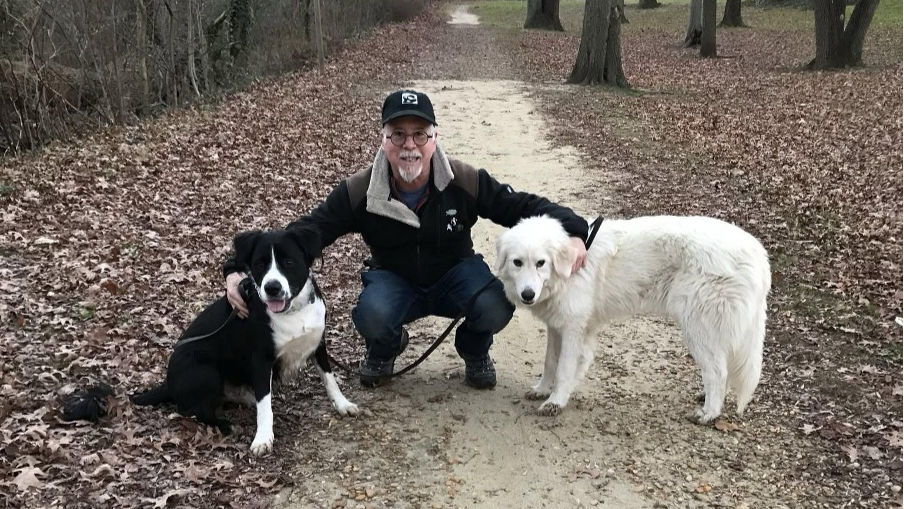
If your rescue puppies could review your writing, who would be the harsher critic:
A. Arthur (author's dog)
B. Bella ✔ (author's dog)
C. House plants
Bella, for sure. She has a lot to say, as our neighbours will attest.
Coffee, tea, or a perfectly quiet room while writing?
Coffee in a quiet room.
One word to describe the first draft of any story.
Joy
Which is more frightening:
A. A blank page,
B. Writer's block ✔
C. An unexpected editor's email
Writer’s block. My wife can speak of my despair upon those occasions, the poor girl.
If you could spend a day with one literary character, who would it be?
Thomasina Coverly from Tom Stoppard’s Arcadia.
What's more likely to inspire a story:
A. A family dinner
B. A walk with the dogs ✔
C. A stranger at a coffee shop
A walk with my former dog, Filmore (God, I miss him). It always did.
Complete the sentence in one word: Writing is fulfilling.
Would you rather:
A) Write the perfect opening line,
B) Write the perfect ending
C) Never face writer's block again? ✔
What's one writing habit that would make your younger self laugh?
A dear friend and writing mentor, Bob Thurber, once gifted me an enormous roll of white paper back when we used typewriters. This, put onto a spindle like a roll of toilet paper, was an encouragement to write without interruption. Just feed that sucker into the carriage and write. Intimidating and hilarious. Well, now, isn’t that the precursor to the endless blank pages in Google Docs? And I do suppose we’ve returned to scrolling.
If your life had a book title today, what would it be in three words or less?
Lost and Found
ABOUT THE AUTHOR

Retired English teacher Jon Gluckman writes in a small southern New Jersey town outside Philadelphia, PA, USA. He is grateful to share his life with his beautiful and brilliant wife, Barbara, and his two lovable, knuckleheaded rescue puppies, Arthur and Bella. He believes that despite the hardships, “Life is Good.”
He has published work in Micro-Fiction Monday Magazine, 101 Words Weekly (x6), Mystery Magazine, Grim & Gilded, Mobius Boulevard, Frontier Tales (x2), The Best of Frontier Tales Anthology Vol. 15, Punk Noir Magazine (x3), Flash Frontier, Black Sheep Magazine Issue 21, The Fifty & Up Writer Awards: The Table Issue #4 (2nd place finalist runner-up), Dark Harbor Magazine, Urban Pigs Press, Weekly Contest (1st place) Author’s Only Collective, 365tomorrows, Close to the Bone, Literary Garage (x2), a finalist for Money Chronicles: A Story Initiative, a national short story contest supported by Principal Foundation, The Center for Fiction and Short Edition, and selected for the Fire in the Lines anthology from Wingless Dreamer.
You can find some of his work on his website: jongluckman.com


Comments